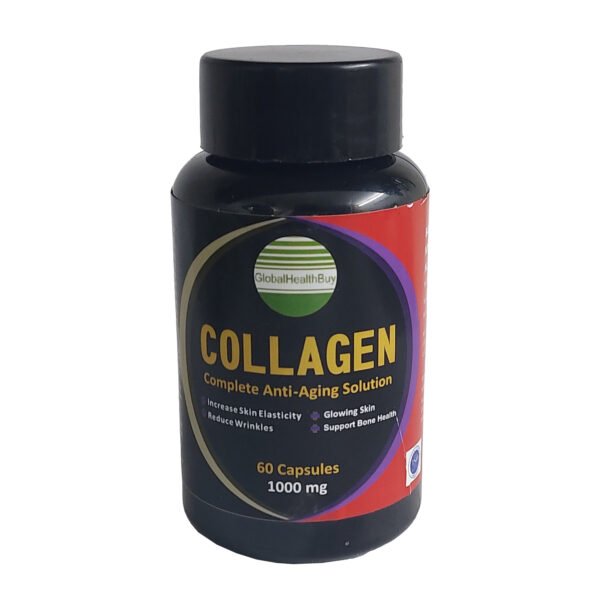
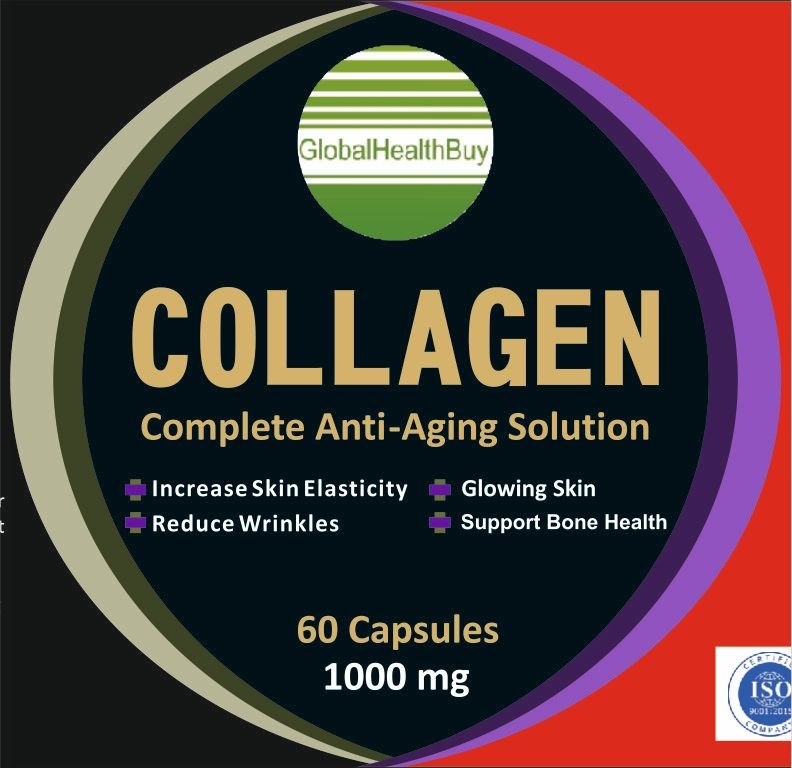
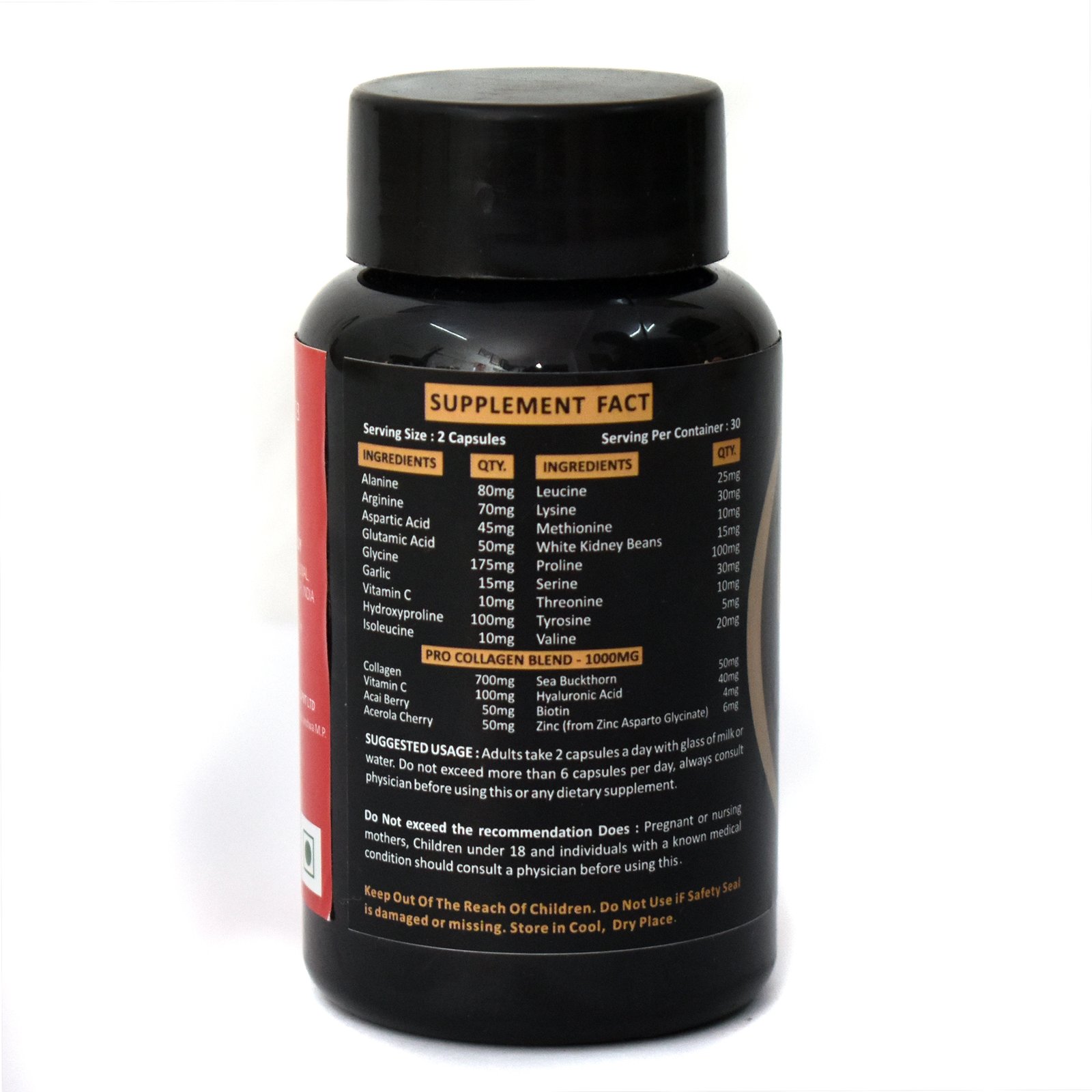
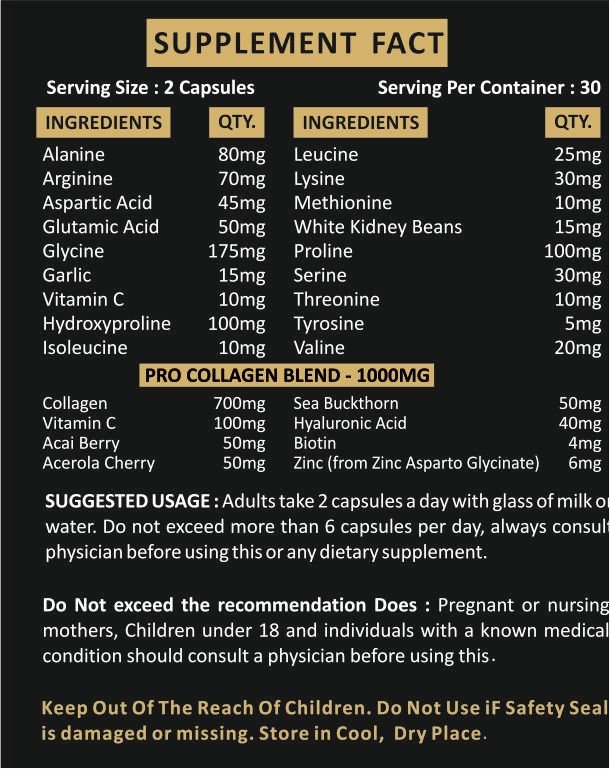
Globalhealthbuy collagen capsules formulated with essential amino acids, such as glycine, proline, and hydroxyproline, which are crucial for collagen synthesis. By consuming collagen protein, you can support your body’s natural collagen production and improve the overall health and appearance of your skin
Elasticity and Moisture: Collagen plays a key role in maintaining skin elasticity and moisture. As we age, collagen production naturally decreases, contributing to the formation of wrinkles and sagging skin.
Wound Healing: Collagen is involved in the wound healing process. It provides a structural framework for new tissue formation and helps in tissue repair.
Joint Health:
Cartilage Support: Collagen is a major component of cartilage, which cushions and protects joints. Collagen supplementation may help support joint health and reduce symptoms of osteoarthritis.
Bone Health:
Bone Structure: Collagen is a component of the bone matrix, providing strength and structure to bones. Adequate collagen levels contribute to bone health.
Hair and Nail Strength:
Hair and Nail Structure: Collagen is present in the hair and nails, contributing to their strength and structure. Collagen supplements are sometimes promoted for improving hair and nail health.
Amino Acids:
Proline and Glycine: These amino acids are crucial for collagen synthesis. Proline provides stability to the collagen structure, while glycine is important for the formation of collagen fibers.
Arginine: Another amino acid important for collagen synthesis, arginine plays a role in the production of nitric oxide, which helps relax blood vessels and improve circulation.
Gut Health:
Intestinal Lining: Collagen is present in the lining of the gastrointestinal tract and may contribute to gut health. Some people use collagen supplements to support digestive health.
Muscle Mass:
Connective Tissue: Collagen is present in the connective tissue that surrounds and supports muscles. While collagen itself is not a direct source of energy for muscles, it plays a role in overall tissue health.
Spread the love
Reviews
There are no reviews yet.
Be the first to review “Collagen capsules- 60 Capsules” Cancel reply




Reviews
There are no reviews yet.